
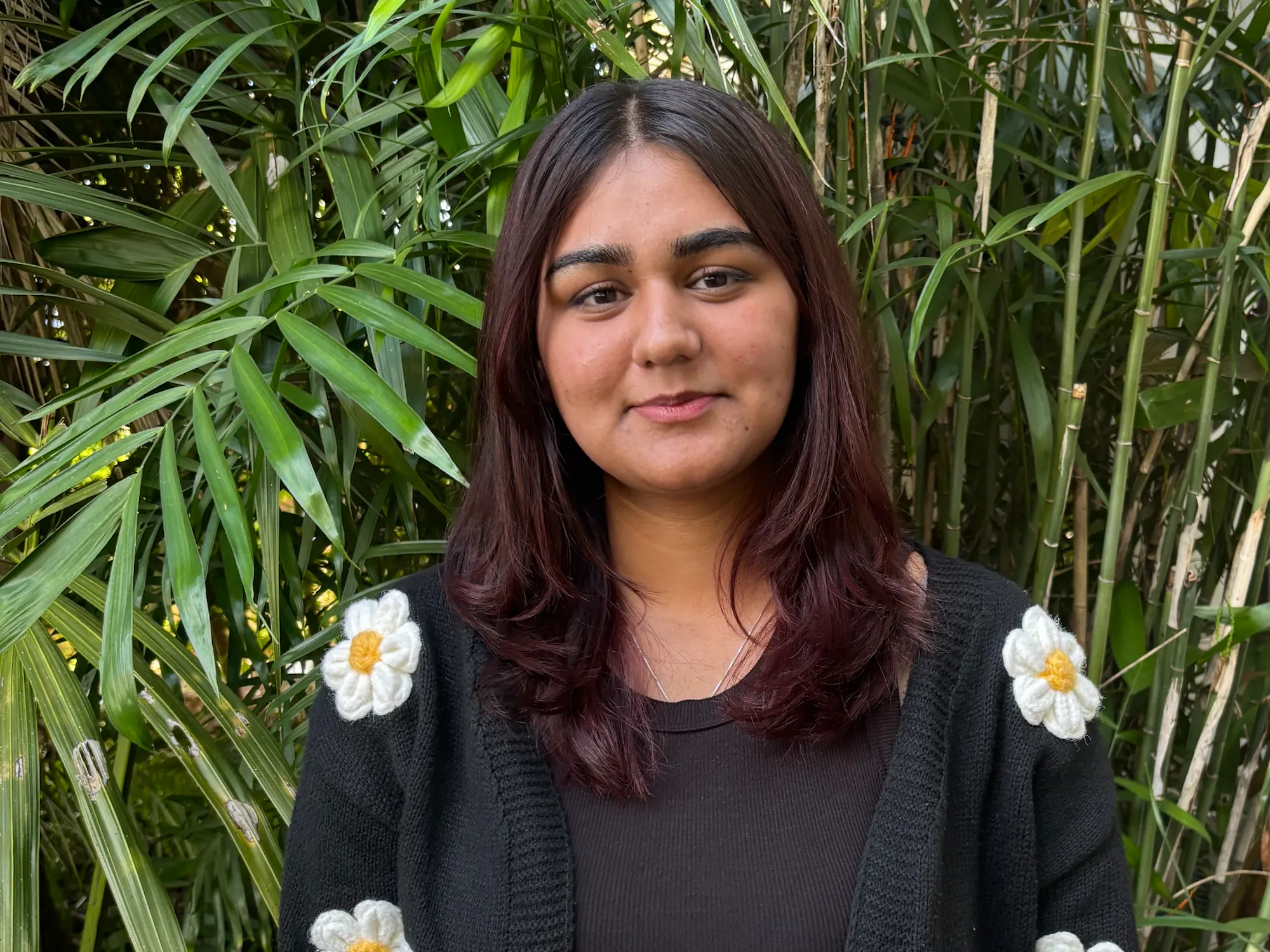
Explaining research can be harder than actually doing it. For Komal Saini, that challenge became the focus of her McCusker Centre for Citizenship internship with the Mental Health & Exercise Research (MHEX) team at UWA.
A Bachelor of Biomedical Science student majoring in Pharmacology with a minor in Brain and Behaviour, Komal was drawn to the internship because she wanted experience that would stretch her beyond the lab and lecture theatre.
“I always wanted to gain some practical knowledge and learn new skills that can help me in the future,” she said. “I also really enjoy volunteering, so getting the chance to work on research that benefits the community was important to me.”
MHEX, led by Associate Professors Kemi Wright and Bonnie Furzer, investigates how exercise and physical activity can support mental and physical wellbeing. A key part of the group's work is ensuring research reaches the people it is intended to benefit, not just other researchers.
Through community partnerships, education and digital resources, MHEX works to make evidence accessible and useful in real-world settings. More information about the group's work is available at: https://www.thrivinginmotion.org/mhex/
Komal's role sat at the point where research meets the public. Rather than producing academic outputs, she was tasked with translating research into clear, engaging digital content. This meant working through complex research papers and turning them into blog posts, plain-language summaries and social media content that could be understood by people without a scientific background.
“I worked on many research papers, including topics like how exercise can support mental health disorders and how physical activity can affect eating behaviour and physical health in transgender individuals,” she said. “The main challenge was figuring out how to communicate that information clearly without losing accuracy.”
The work required careful consideration of different audiences. Content aimed at community members needed a different approach to material intended for students, researchers or health professionals. This audience-focused perspective helped shape how MHEX shared its research beyond academic settings.
One of the most meaningful aspects of the internship for Komal was knowing that her work could help people better understand important health information.
“I really enjoyed creating plain-language content and knowledge-sharing materials that could help people better understand mental health, exercise and inclusive health services,” she said. “It felt good knowing the information might actually reach people who need it.”
Managing multiple content projects while balancing university commitments was challenging at times, but it helped Komal strengthen her organisation, communication and time management skills.
Her supervisor, Felicity Austin, said Komal's contribution directly supported MHEX's mission.
“Our Mental Health and Exercise Rehabilitation group exists to make sure exercise and mental health research reaches the people it is intended for, not just other researchers,” she said. “Interns like Komal help us do that. Her work meant our research reached people in language they could actually use, which is exactly what we're trying to build within MHEX.”
The experience also changed how Komal thinks about the role of research in the community.
“It showed me how important research translation is for improving health equity,” she said. “Even small changes in how information is shared can make a big difference for people who face barriers to healthcare or physical activity.”
Looking ahead, Komal sees the internship as a foundation for future work in health, communication or research-focused roles.
“The skills I've developed — communication, teamwork and digital content creation — are things I know I'll use in the future,” she said.
She encourages other students to consider a McCusker Centre for Citizenship internship, particularly those who want to see how their studies can make an impact beyond the university setting.
“It gives you real-world experience and helps you understand how your work can support the community,” she said.