
Raja Venkata Shandilya Puram – Master of Data Science
Research Assistant (Data Processing) - Intern, Perron Institute
Raja Venkata Shandilya Puram applied for a McCusker Centre for Citizenship internship to move beyond theory and test his skills on a real research problem.
“I wanted real experience applying what I’m learning in my degree to an actual research opportunity,” he said.
At the Perron Institute, he joined a project investigating brain stimulation as a potential treatment for adolescent depression. Aiming to better understand how a developing brain responds, Shandilya’s role focused on turning video recordings of behavioural tests in a mouse model into usable data.
Shandilya built automated analysis to do this more efficiently, creating systems that can convert data into clear behavioural reports.
He also added a validation step, allowing researchers to check how reliable each result is before using it.
“The bigger picture is turning raw video into usable data much faster and more consistently,” he said.
For the research team, the tools reduce the time required for manual analysis and allow larger volumes of data to be processed efficiently, supporting faster and more consistent research outcomes.
His supervisor, Professor Jennifer Rodger, head of Brain Plasticity Research at the Perron Institute and UWA, said the impact of the work was immediate.
“Raja was a pleasure to work with — hardworking, enthusiastic and deeply engaged with the project from start to finish,” she said. “The tools he developed have already supported a wide range of student projects in my team and have substantially increased our capacity.”
“For us, the opportunity to work with someone with specialist data science expertise on a custom tool we genuinely needed was invaluable, and the benefits will continue well beyond the internship,” she added.
One of the most satisfying moments came when the system worked as intended.
“Seeing it finally produce a clean, complete output… was honestly one of the best feelings,” he said.
This experience shifted how he approaches data science.
“I went in thinking it was mostly about writing good code,” he said. “I came out realising it’s just as much about understanding what your data actually represents.”
For Shandilya, the broader impact of the project is clear. Improving how behavioural data is processed helps researchers better understand depression in young people, which is an important step in developing safe and effective treatments.
The internship has also given him practical experience he can carry into future roles, including working with real data, building end-to-end systems, and explaining limitations clearly.
“I now have a real project I can talk about — something built on real data with real constraints,” he said.
He encourages other students to consider similar opportunities.
“If you want experience where your work actually gets used, this is it,” he said.
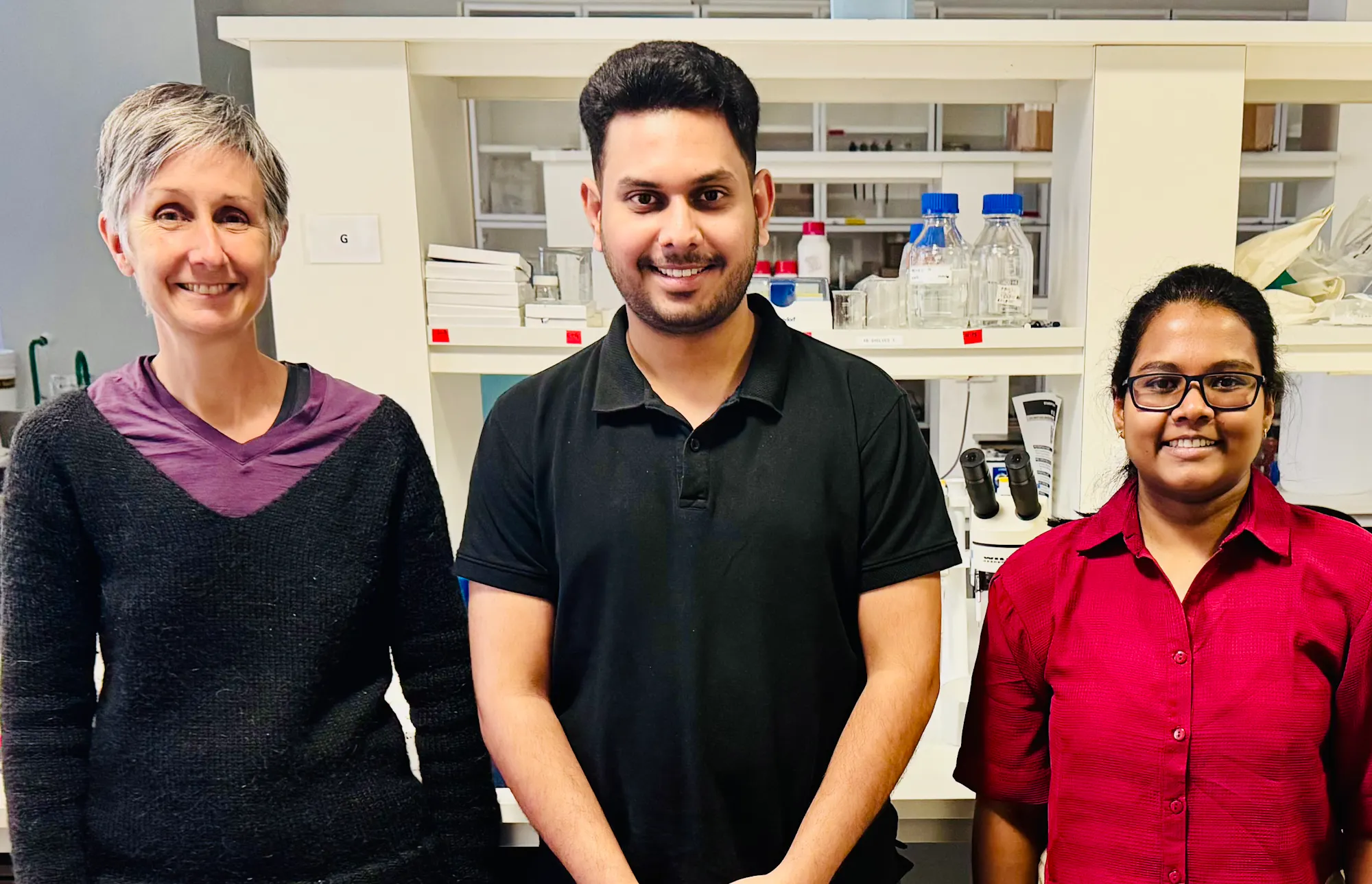
Image: Shandilya with supervisors, Professor Jennifer Rodger and Lakshini Piyasiri